The number at the bar, adjusted for what you ate.
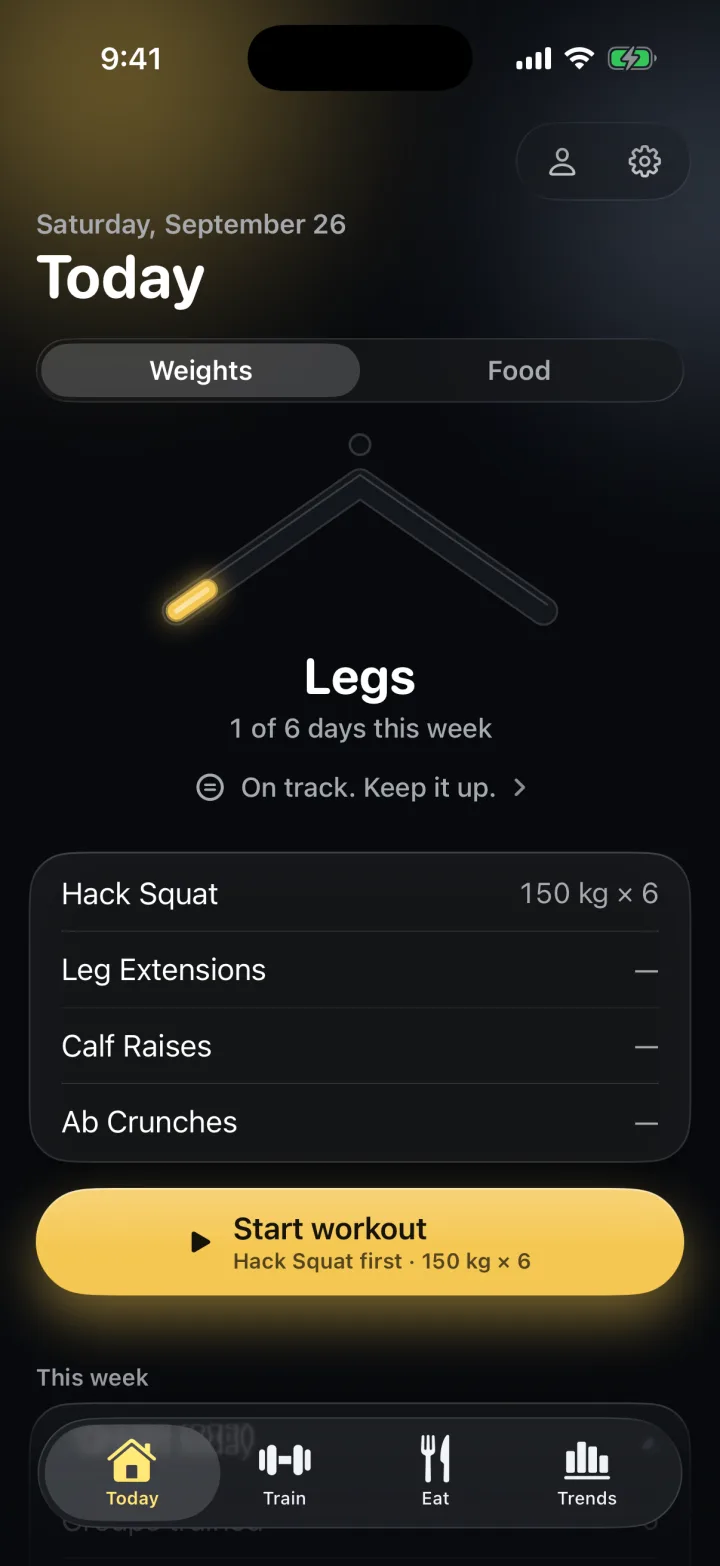
Atlas is a training and food log for iPhone and Apple Watch that reads itself back to you. It names your next set, weighs it against what you ate, and says one thing about it.
Training
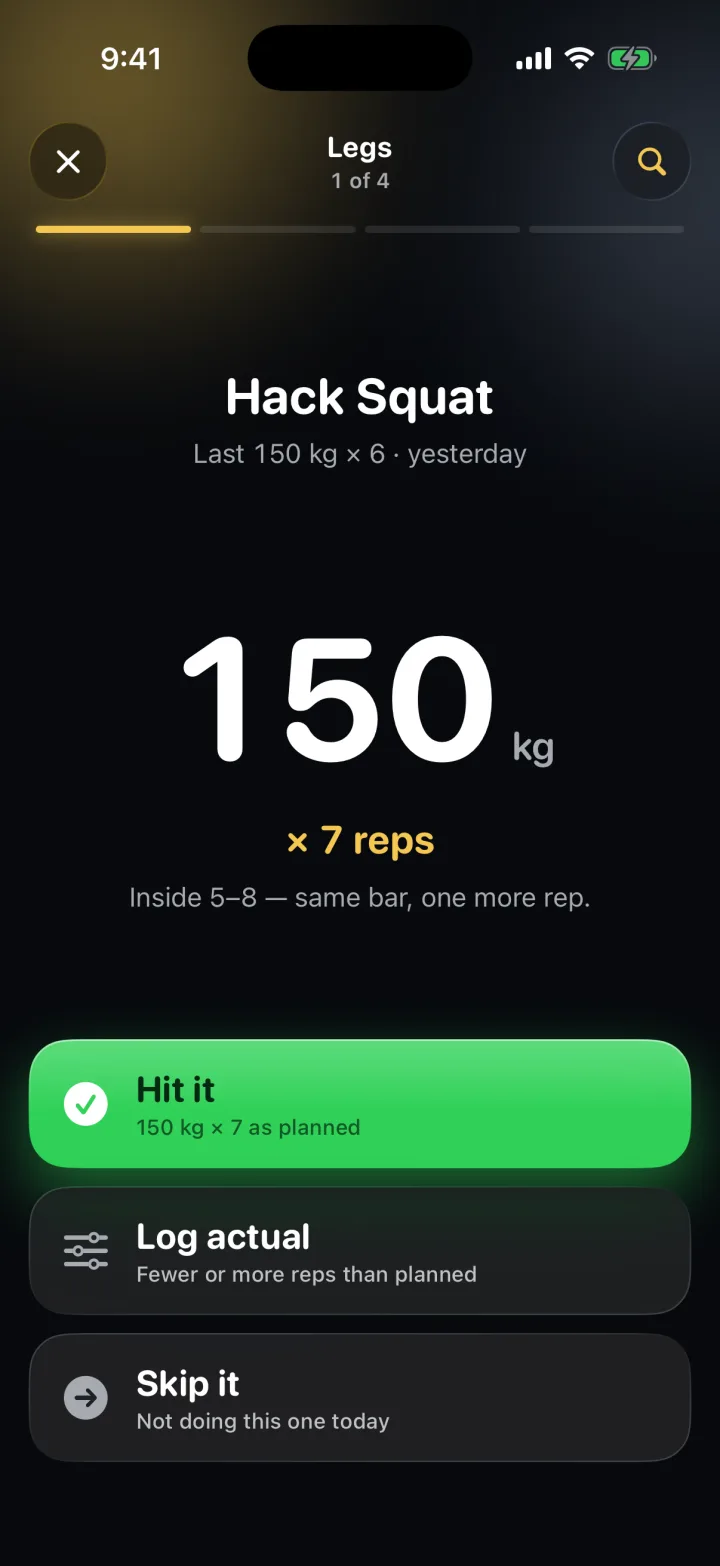
One number at the rack.
Mid-set you glance, you don’t read. The weight is the biggest thing on the screen, the reps sit under it, the reason is one line.
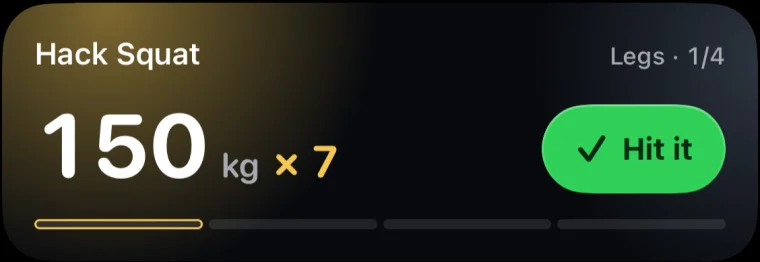
- The number, before you ask. 150 kg × 7, and why.
- Hit it. Logged as planned. Or Log actual, or Skip it.
- The next set is already named. Top of 5–8 last time: up 5 kg, back to 5s.
Coach
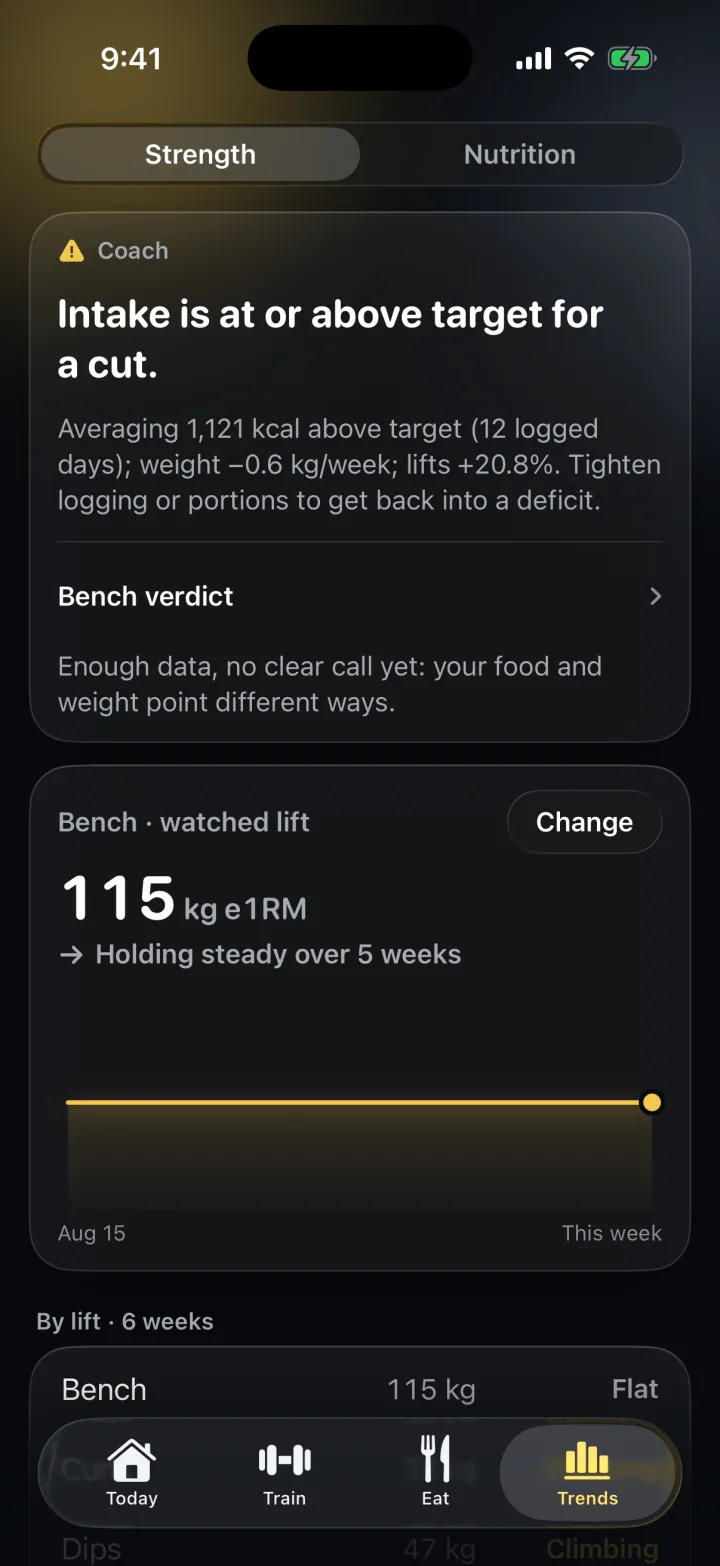
It reads your food and your lifts as one thing.
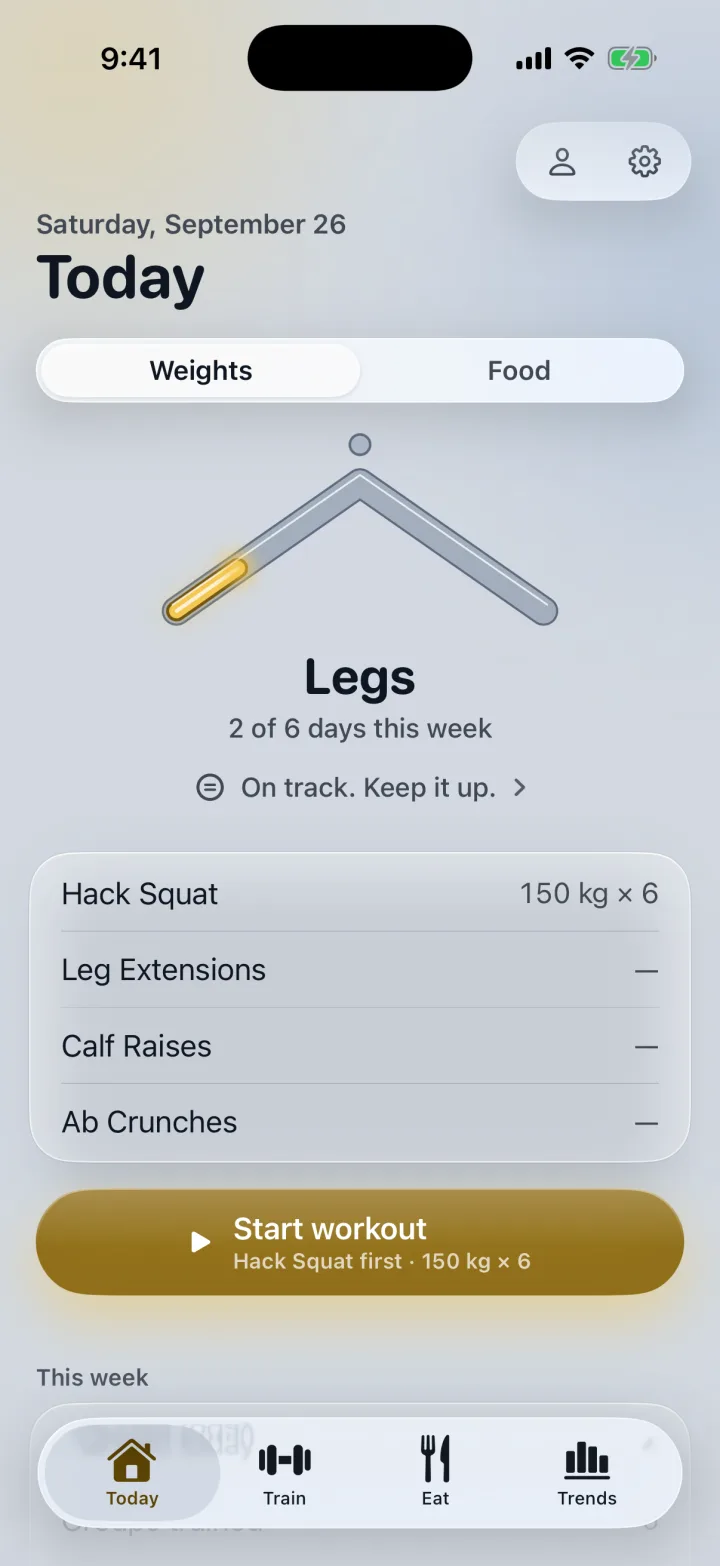
The coach weighs calorie balance, weight change, strength trend and how consistently you log, then says one thing. When a lift stalls, it tells you whether the problem is the program or the plate.
One line under the Peak on Today; tap it for the evidence.
Food
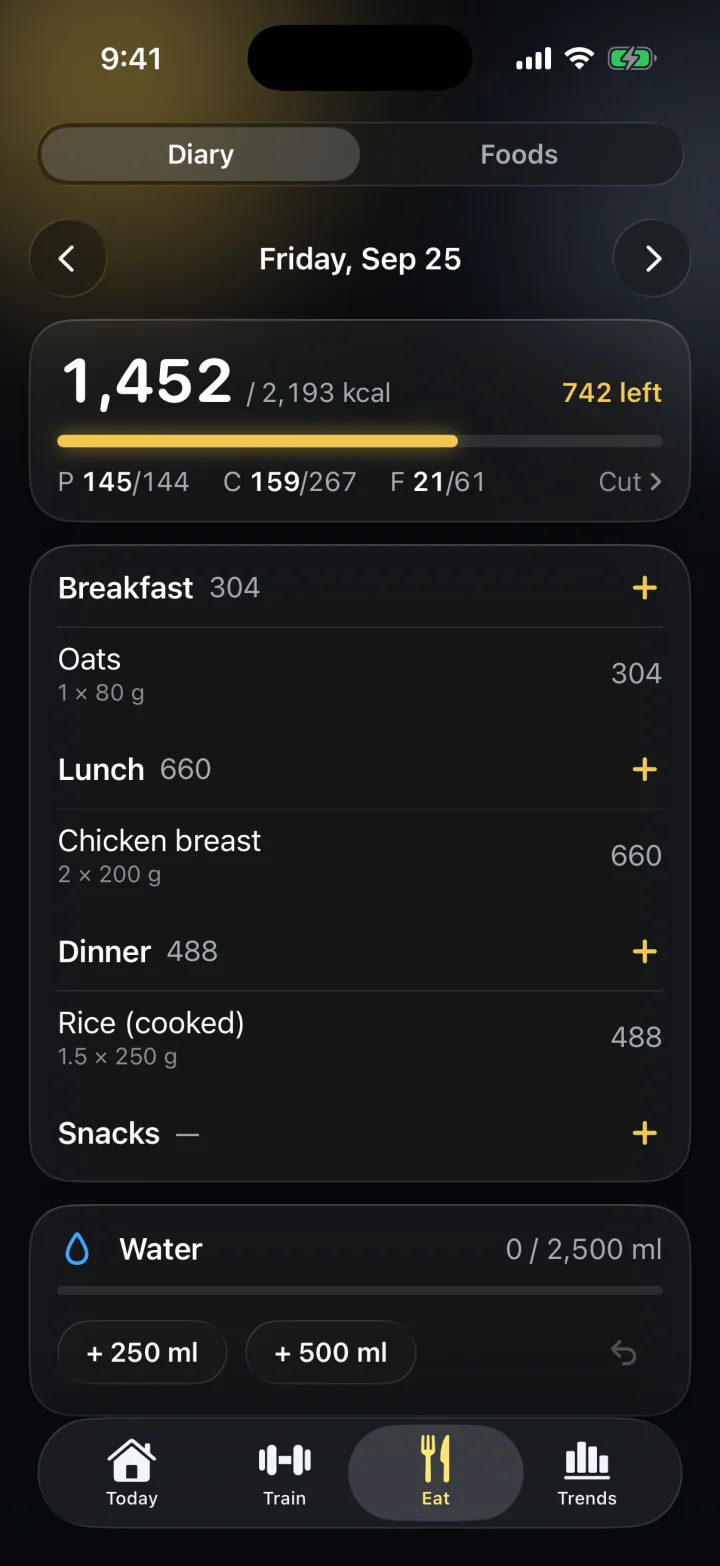
The diary already knows the menu.
Food is the input the coach reads, so logging it has to be quick enough to actually do. Most of the time it’s a search that answers before you finish typing.
- 12,067 foods, no signal needed
- Campus dining and 17 chains
- Barcode scanning
Apple Watch
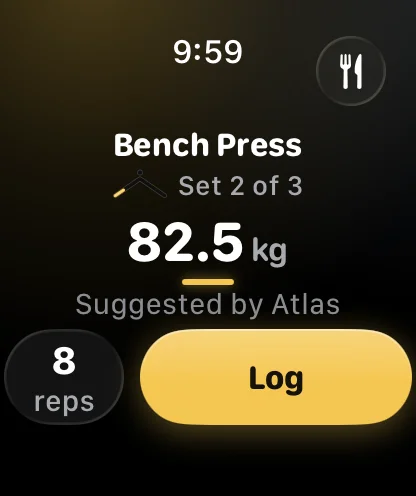
Log the set without taking the phone out.
Turn the Digital Crown to set the weight, tap Log. Green when it reached the phone, a different colour when it’s queued.
Lock Screen
The planned set, on the Lock Screen.
The same session runs as a Live Activity. Hit it logs it without opening Atlas, and the phone is up to date.
Widgets: Next Set, Calories, Best Lift, Consistency, and Scan Food.
Look
Liquid in the dark. Frost in the light.
Atlas lights itself with your colour. Five accents, each tuned to pass contrast in both modes. Try one.
Gold